This guide breaks down the core lens decisions every retailer should master.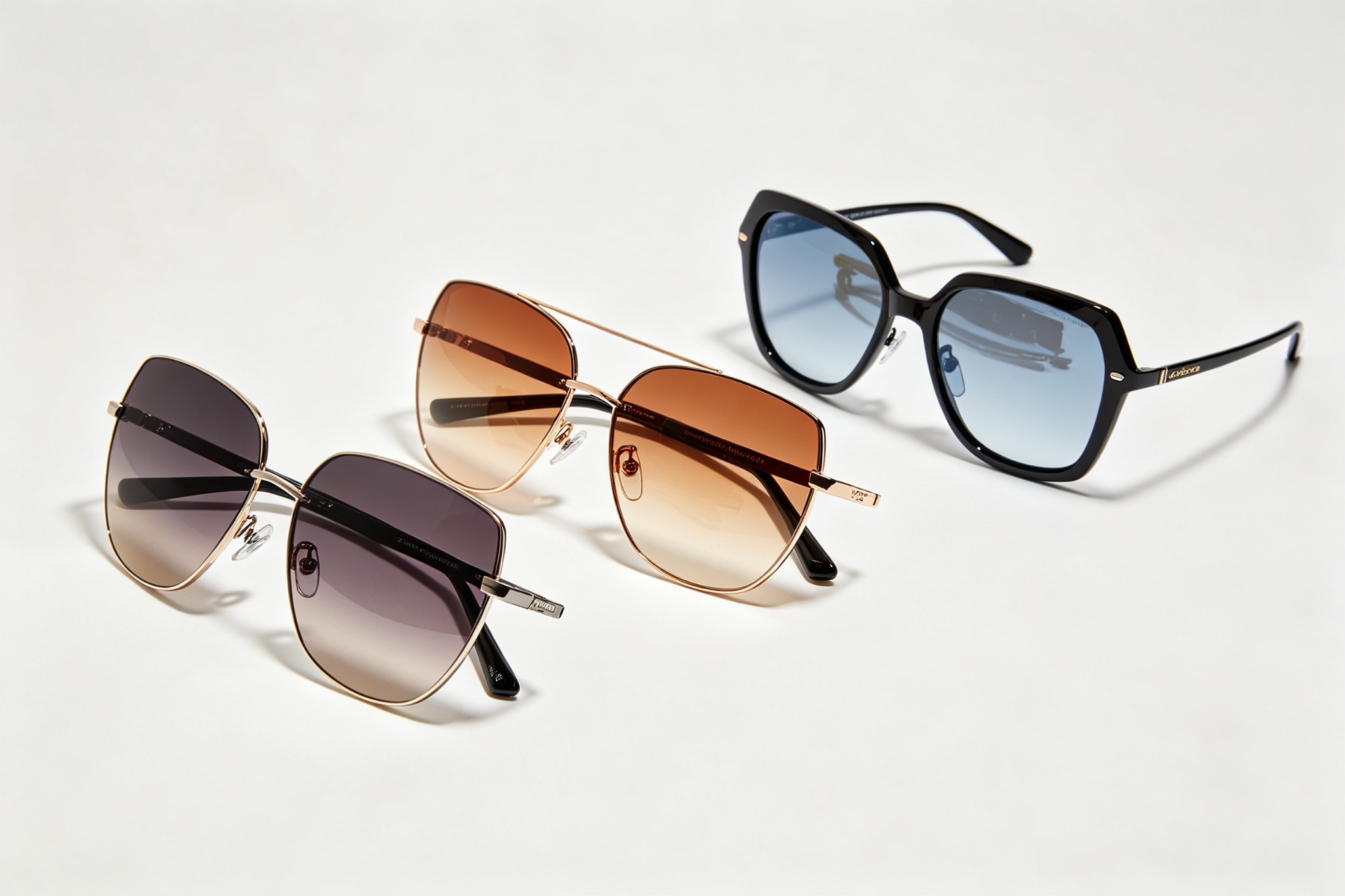 1. UV Protection: The Non-Negotiable Baseline
Every pair of sunglasses you sell should block 100% of UVA and UVB radiation (often labeled UV400, meaning it filters wavelengths up to 400 nanometers). UV damage is cumulative and irreversible, contributing to cataracts, macular degeneration, and photokeratitis. If a pair doesn't offer full UV protection, it isn't a real sunglass—it's a fashion accessory that can actually harm the wearer by causing pupils to dilate behind a dark tint.
The European EN ISO 12312-1 standard classifies sunglass lenses by visible light transmission (VLT):
Category 0 — 80–100% VLT. Fashion or indoor use; not sun protection.
Category 1 — 43–80% VLT. Low sun, cloudy days.
Category 2 — 18–43% VLT. Medium sun, everyday urban wear. The most versatile all-rounder.
Category 3 — 8–18% VLT. Strong sunlight, beach, driving. The standard for most quality sunglasses.
Category 4 — 3–8% VLT. Extreme glare, glaciers, high altitude. Not legal for driving.
Most lifestyle customers are best served by Category 2 or 3. Category 4 should be reserved for specialist outdoor use and clearly labeled as unsuitable for driving.
Polarized lenses contain a laminated filter that blocks horizontally oriented light—the kind that reflects off water, asphalt, and car hoods. The result is dramatically reduced glare, improved contrast, and less eye fatigue. They are ideal for drivers, boaters, fishermen, and anyone spending long hours outdoors.
However, polarization is not universal. It can interfere with LCD/LED screens (dashboard displays, ATMs, phone screens in certain orientations) and is not recommended for pilots or downhill skiing where glare on ice provides important depth cues. Always ask about the customer's primary use case before recommending polarization.

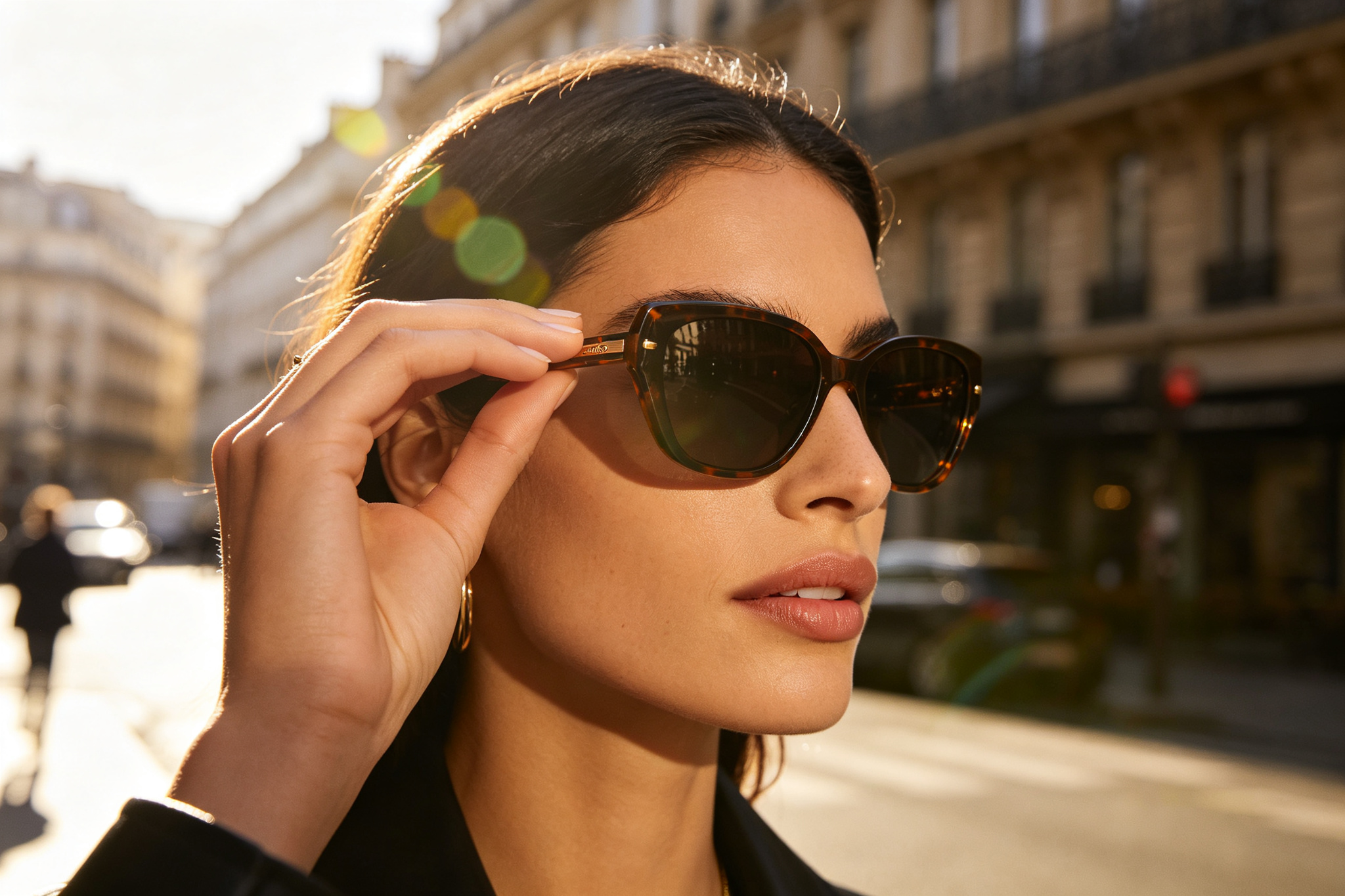
CR-39 (Organic / Plastic) — Excellent optical clarity, lightweight, easy to coat. The workhorse of mid-range eyewear. Less impact-resistant than polycarbonate.
Polycarbonate — Virtually unbreakable, 30% lighter than CR-39, naturally UV-blocking. The standard for sports and children's eyewear. Slightly lower Abbe value (minor chromatic aberration at the edges).
Nylon (Trivex / Grilamid) — Combines the clarity of CR-39 with the impact resistance of polycarbonate. Premium choice for performance and lifestyle frames.
Glass — Superior optical clarity and scratch resistance, but heavy and breakable. Found in heritage and luxury brands; rarely used in active lifestyle products.
Mirror coatings reflect incoming light, reducing VLT further and adding a distinctive aesthetic. They are popular in sports and fashion. Gradient lenses are darker at the top and lighter at the bottom, ideal for driving (shading overhead sun while keeping the dashboard visible). Double-gradient lenses are dark at both top and bottom with a lighter band in the middle, favored for high-altitude and water sports.
Daily urban / commuting — Category 2–3, CR-39 or polycarbonate, optional polarization, gradient tint.
Driving — Category 3, polarized or non-polarized, brown/gray tint, avoid Category 4 and deep blue.
Water sports / fishing — Category 3 polarized, amber or copper tint for contrast.
Snow / high altitude — Category 3–4, polarized with mirror coating, wraparound frame.
Fashion / lifestyle — Category 2–3, any material, focus on frame aesthetics and tint color coordination.
The best sunglass lens is the one that matches the customer's environment, activities, and budget. By asking three simple questions—Where will you wear them? What will you do? What is your budget?—any retailer can guide a customer from confusion to confidence. At JOYPLUS, we offer full lens customization across our OEM/ODM catalog, from CR-39 to nylon, polarized to photochromic, helping our partners build assortments that sell through in every season.