A quality pair of sunglasses is an investment. With proper care, a well-made frame can last a decade or more; with neglect, it can become unwearable in a single season. For retailers, teaching customers basic eyewear hygiene is one of the highest-ROI services you can offer—it protects the customer's purchase, reduces warranty claims, and builds trust that drives repeat business.
Here is the professional care routine we recommend to every partner and end customer.
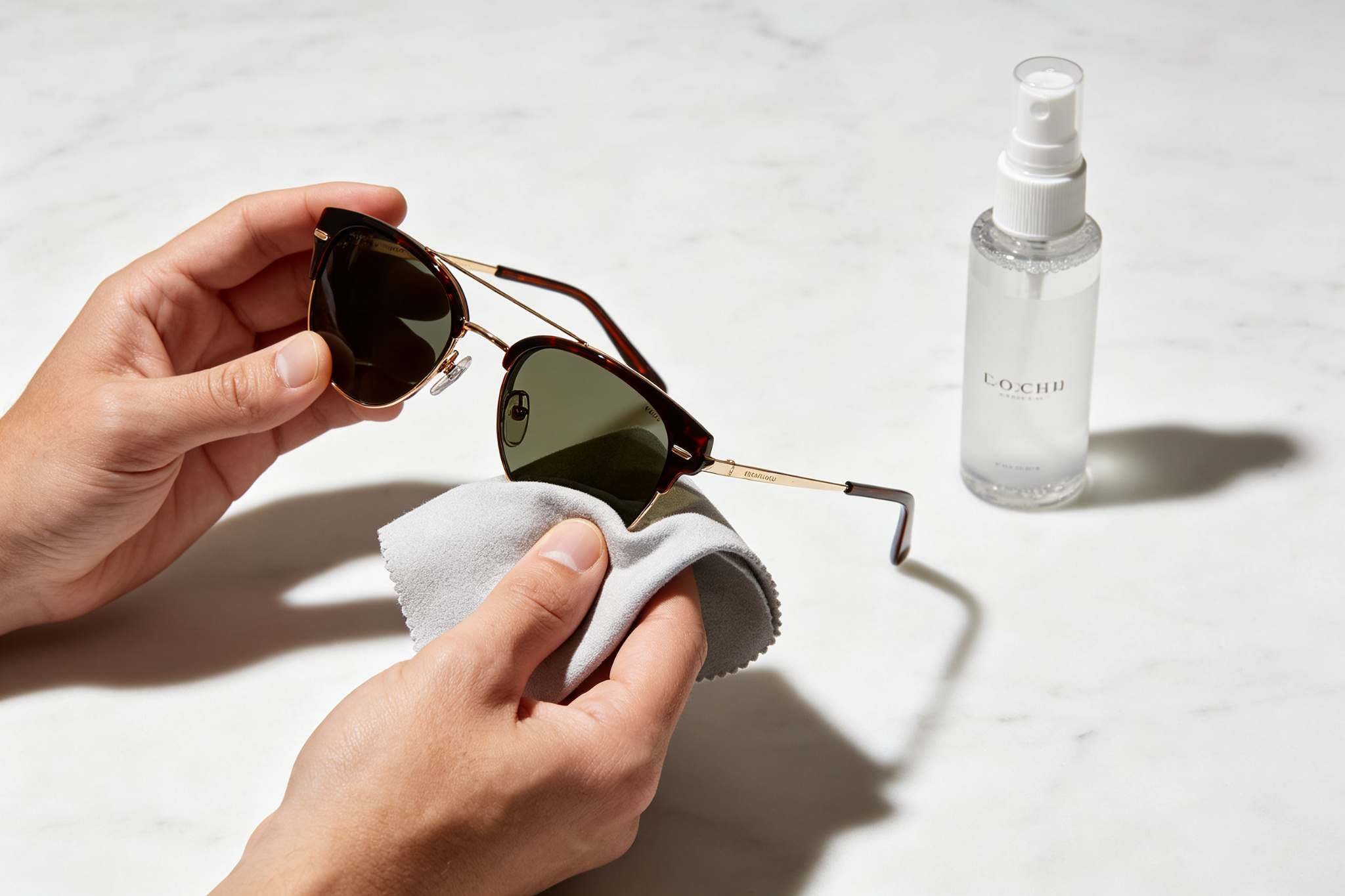
Lenses pick up skin oils, sunscreen, dust, and salt residue every time they are worn. A proper clean takes under 30 seconds:
Rinse under lukewarm running water to remove loose grit. Never use hot water—it can damage lens coatings and frame adhesives.
Apply a small drop of mild, lotion-free dish soap or a dedicated lens cleaning solution. Avoid products containing alcohol, ammonia, or bleach.
Gently rub both sides of each lens and the frame with clean fingertips. Pay attention to the nose pads and hinge areas where oil accumulates.
Rinse thoroughly and shake off excess water.
Dry with a clean microfiber cloth using a light blotting motion. Never rub in circles—this can push grit across the coating.
Some of the most common "cleaning" habits are actually the most damaging:
Paper towels, napkins, and tissues — Made from wood pulp, they contain microscopic fibers that scratch lens coatings.
Shirt hems and clothing — Fabric traps dust and may contain laundry detergent residue.
Spit — Enzymes and bacteria can degrade anti-reflective coatings over time.
Alcohol, Windex, or glass cleaners — Strip away anti-reflective, anti-fog, and mirror coatings.
Dishwashers — High heat and harsh detergents will destroy acetate frames and lens coatings.
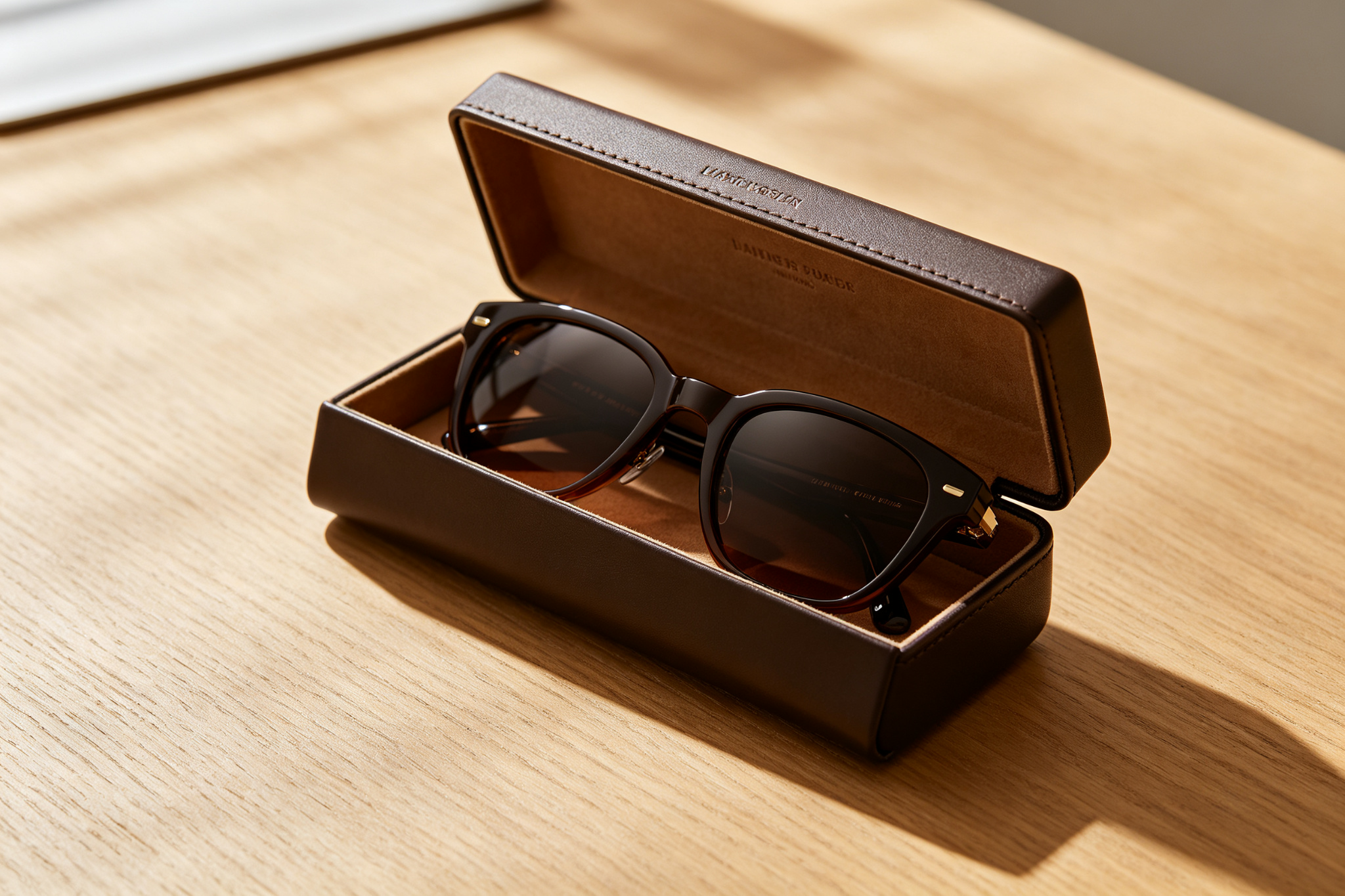

How sunglasses are stored when not in use is just as important as how they are cleaned. Always store them in a hard, protective case with the lenses facing upward. Avoid tossing them loose into a bag where keys, coins, and cosmetics can scratch the lenses or bend the frame.
Never leave sunglasses on a car dashboard or in a glove compartment during hot weather. Temperatures inside a parked car can exceed 70°C (160°F), causing acetate frames to warp, lens coatings to bubble, and adhesives to fail. This is the single most common cause of premature frame damage we see in our quality lab.
Over time, frames naturally loosen from repeated putting on and taking off. Small screws at the hinges may need occasional tightening with a precision eyeglass screwdriver. If the frame feels uneven or slips down the nose, do not attempt to bend acetate or metal frames by hand—take them to an optician or authorized retailer who has the proper heating and adjustment tools. A five-minute professional adjustment can restore a perfect fit and prevent further damage.
Summer / beach — Rinse with fresh water after saltwater exposure. Salt crystals are highly abrasive and corrosive to metal frames.
Winter / snow — Wipe away snow and ice gently; never chip at frozen lenses. Anti-fog wipes can be useful for ski goggles but avoid on standard AR-coated lenses.
Sunscreen & cosmetics — These contain oils and chemicals that can degrade acetate and frame finishes. Wipe frames clean at the end of each day.
Long-term storage — Clean thoroughly, dry completely, and store in the case in a cool, dry place away from direct sunlight.
Even with perfect care, lenses eventually need replacement. Signs it's time include: deep scratches that impair vision, peeling or bubbling coatings, yellowing of the lens material, or a frame that can no longer hold its adjustment. As a rule of thumb, premium sunglasses should be replaced every 2–3 years with regular daily use, or sooner if the lenses show visible wear.
Eyewear care is not complicated—it just needs to be consistent. A microfiber cloth, a bottle of lens cleaner, and a hard case are all that's required to keep a premium pair looking and performing like new for years. At JOYPLUS, every frame we manufacture is designed to withstand years of daily wear, and we include care instructions with every shipment to help our partners educate their customers from day one.